
A new study published in the Journal of Geophysical Research: Planets details the discovery of a Mars mineral that forms on Earth within a river, delta, or a shoreline of a ancient lake, leading researchers to thinking the Gale Crater on Mars was once home to water and oxygen.
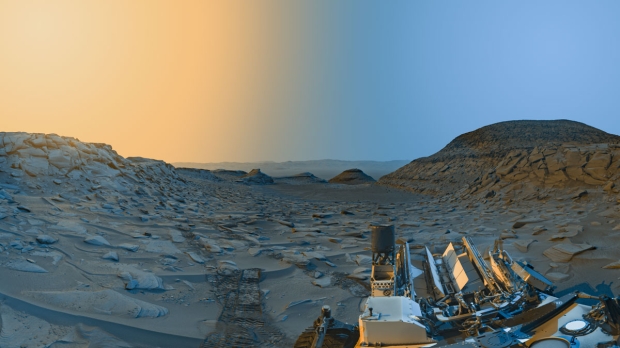
The team explained that NASA's Curiosity rover discovered higher-than-usual amounts of manganese in rocks within the Gale Crater on Mars. Using the rovers ChemCam, an instrument that fires a laser into rocks, the rover collected data that researchers have now analyzed and published in a study.
Patrick Gasda, Los Alamos National Laboratory researcher and lead author of the study explained the formation of maganese happens all the time on Earth due to the high amounts of oxygen in Earth's atmosphere produced by photosynthetic life, "and from microbes that help catalyze those manganese oxidation reactions." However, Mars doesn't have any oxygen, and there is no evidence of life, despite researchers suspecting that ancient Mars may have had the right environment to host life.
"On Mars, we don't have evidence for life, and the mechanism to produce oxygen in Mars's ancient atmosphere is unclear, so how the manganese oxide was formed and concentrated here is really puzzling," he added. "These findings point to larger processes occurring in the Martian atmosphere or surface water and shows that more work needs to be done to understand oxidation on Mars."
"The Gale Lake environment, as revealed by these ancient rocks, gives us a window into a habitable environment that looks surprisingly similar to places on Earth today," said ChemCam principal investigator Nina Lanza, noting that "it's remarkable to find such recognizable features on ancient Mars."
![Photo of the $10 -PlayStation Store Gift Card [Digital Code]](https://m.media-amazon.com/images/I/41MT2s0Gm2L._SL160_.jpg)