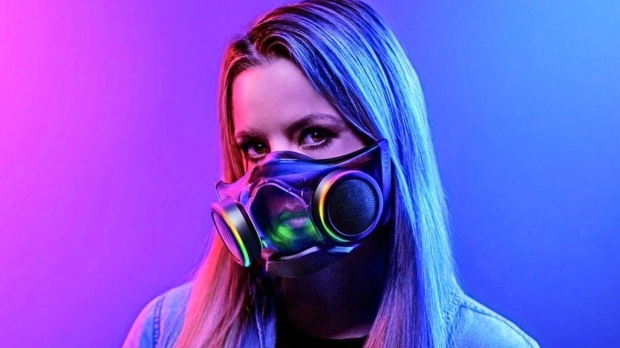





In 2021, when the global pandemic was raging and social distancing was in full effect, gaming peripheral and hardware company Razer decided to release its own RGB-lit facemask called the Razer Zephyr. The mask would feature an interchangeable filter system, a see-through front piece, UV light sterilization, RGB lighting, Razer style, and N95-grade filters - except the last bit wasn't real.

The one thing many expected the mask would do is to filter out at least 95% of airborne particles (between .1 and .3 micrometers in size), but it couldn't. Or, at least Razer never submitted the Zephyr mask to the U.S. Food and Drug Administration (FDA) or the National Institute for Occupational Safety and Health (NIOSH) to receive N95 certification.
Priced at $100 USD, reviewers called out Razer for the Zephyr not meeting the N95 standards for what was an expensive face mask. The Federal Trade Commission (FTC) stepped in around the time Razer removed mentions of N95 from the product page. But it was too little too late.
It turns out that Razer will now have to pay out $1.1 million in refunds to customers in the United States, which equates to the revenue generated from the sales of Zephyr masks. In addition to this, Razer will pay a $100,000 fine to the FTC for false advertising.
"These businesses falsely claimed, in the midst of a global pandemic, that their face mask was the equivalent of an N95 certified respirator," said Samuel Levine, Director of the FTC's Bureau of Consumer Protection. "The FTC will continue to hold accountable businesses that use false and unsubstantiated claims to target consumers who are making decisions about their health and safety."