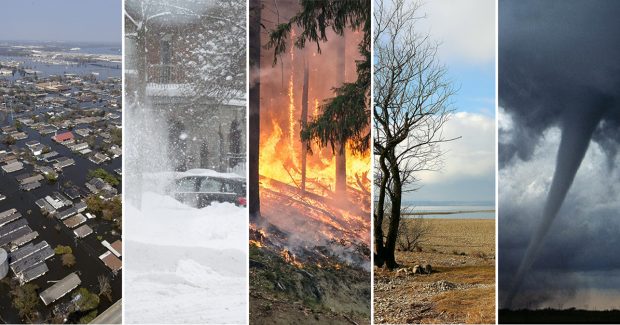





Google is set to shake up the weather prediction industry with the release of SEEDS, or the Scalable Ensemble Envelope Diffusion Sampler AI model.

The new Large Language Model (LLM) is designed to provide accurate weather predictions much cheaper and faster than traditional weather prediction tools, specifically, weather events such as hurricanes or heat waves that can have a potentially devastating impact on regions. So, how does it work? Predicting the weather inherently is difficult due to the multitude of variables that are at play, with current forecasting being good enough for conditions such as local temperature, it gets progressively more difficult the further out into the future those predictions.
Popular Now: Xbox Series X can now run PS5 games thanks to a new emulatorIt gets even harder to predict the occurrence of an extreme weather event as that is a culmination of all the variables in typical weather predictions plus random variables that would induce an extreme weather event. The accuracy of predicting an extreme weather event is currently extremely low, with Google explaining that a model needs to incorporate 10,000 weather predictions for an event to have a 1% likelihood of occurrence.
Traditional weather prediction models produce an ensemble of 10 - 15 predictions, using physical measurements such as the relationship between the potential energy unit per mass of Earth's gravity field in the mid-troposphere and sea level pressure. SEEDS is capable of up to 31 prediction ensembles.
The researchers behind the project said the costs of running SEEDS are "negligible" compared to traditional methods of weather prediction.
![Photo of the $10 -PlayStation Store Gift Card [Digital Code]](https://m.media-amazon.com/images/I/41MT2s0Gm2L._SL160_.jpg)