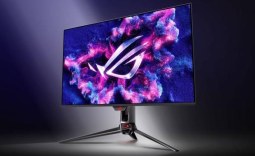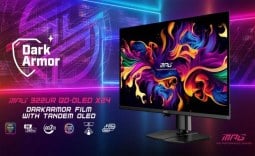




OLED panels have been around for quite some time, but now we are starting to see them come to gaming monitors, raising concerns about burn-in issues.
OLED pixel technology has been used in smartphones and TVs for many years now, and with each iteration of the technology, improvements are being made to the quality of the panel, particularly with the reduction of known problems. But now we are starting to see the gaming industry be blessed with gorgeous QD-OLED panels, and the brands behind these new gaming monitors are rolling out features such as MSI's OLED Care technology to reduce the chances of debilitating issues such as burn-in.
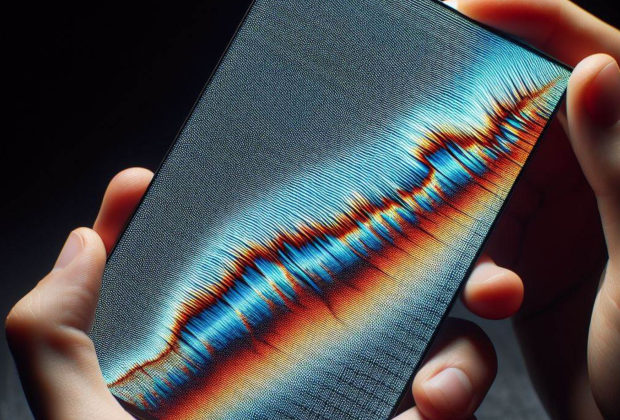
For those who don't know, burn-in occurs when the same static image is displayed for extended periods of time. For example, the time and date located in the bottom right-hand corner of Windows. Notably, burn-in isn't something the average user needs to worry about as many different windows are opening and closing, refreshing the pixels. However, some use cases will have to worry about it, such as word processing workflows that don't require many window changes or even gamers that play for extended periods of time with static images in their HUD (a red dot in the center of the screen for FPS games).
So, how can this be solved? A new study published in the journal Nature by researchers from the University of Cambridge proposes a solution to burn-in issues: better control for the blue light-emitting diodes. The researchers explain that encapsulating the light emitters in alkylene straps would not only cut down on burn-in but also make the manufacturing process much more efficient.
Unfortunately, a breakthrough such as this in the understanding of how OLED pixel technology is far from being implemented into the new OLED gaming monitors expected to be hitting the market this year, as it would require a partial or even complete overhaul of the manufacturing process of OLED panels. With an overhaul of a manufacturing process comes all of the logistical problems, such as the potential for the cost-per-panel being increased, time, etc.
However, breakthroughs such as this showcase that burn-in won't be a problem forever and that as a deeper understanding of the pixel technology is developed, the problems will be solved. OLED displays are clearly the best-looking panels on the market, hence LG and Samsung making their flagship TVs OLED panels. There simply isn't anything that compares to the performance of OLED, and the sooner its burn-in issues are ironed out, the better.
![Photo of the $25 PlayStation Store Gift Card [Digital Code]](https://m.media-amazon.com/images/I/41cEZpeUA1L._SL160_.jpg)