




Researchers from the University of New South Wales (UNSW), Australia, have announced they have made a breakthrough in the quest to create solar powered eye implants.
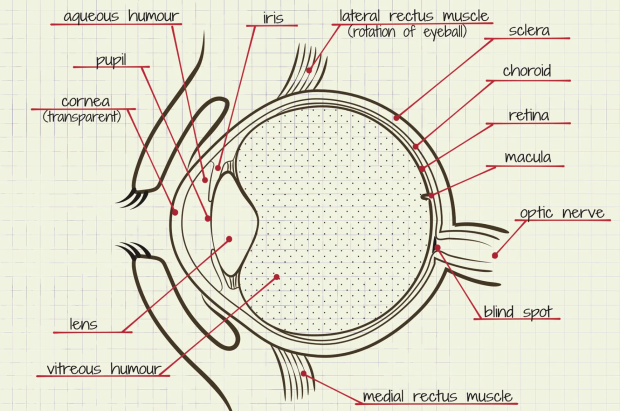
Eye implants such as these are designed to assist people with sign impairments and, if they ever come to fruition, will be able to greatly improve the quality of life of people suffering from degenerative eye diseases. The team is concentrating its efforts on using neuroprosthetic technology on people with damaged photoreceptors, which are specialized cells within the retina that absorb light and convert it into electrical signals that are sent to the visual cortex. In short, it is the part of the eye that helps register images.
Retinitis pigmentosa (RP) and age-related macular degeneration (AMD), both of which degrade the part of the eye responsible for image registering. Researchers want to cure those diseases, and according to reports, solar photovoltaic panels will be able to generate enough electricity to power the sensor chips to restore vision to people suffering from these impairments. It works like this. Tiny solar cells are stacked on top of each other and then generate enough electricity to stimulate neurons that produce images.

"People with certain diseases like retinitis pigmentosa and age-related macular degeneration slowly lose their eyesight as photoreceptors at the center of the eye degenerate," said Udo RÜmer, an engineer whose expertise is in photovoltaics, commonly known as solar panel tech. "It has long been thought that biomedical implants in the retina could stand in for the damaged photoreceptors. One way to do this is to use electrodes to create [a] voltage pulse that may enable people to see a tiny spot."
In theory, this device can work, but at the moment, it remains in the proof-of-concept stage, with the researchers achieving a low-resolution black-and-white image. Additionally, the researchers note that sunlight alone might not be strong enough to work with these solar cells implanted in the retina and that some kind of glasses or goggles designed to amplify the light may be required.
"One thing to note is that even with the efficiencies of stacked solar cells, sunlight alone may not be strong enough to work with these solar cells implanted in the retina," said RÜmer. "People may have to wear some sort of goggles or smart glasses that work in tandem with the solar cells that are able to amplify the sun signal into the required intensity needed to reliably stimulate neurons in the eye."
![Photo of the $25 PlayStation Store Gift Card [Digital Code]](https://m.media-amazon.com/images/I/41cEZpeUA1L._SL160_.jpg)