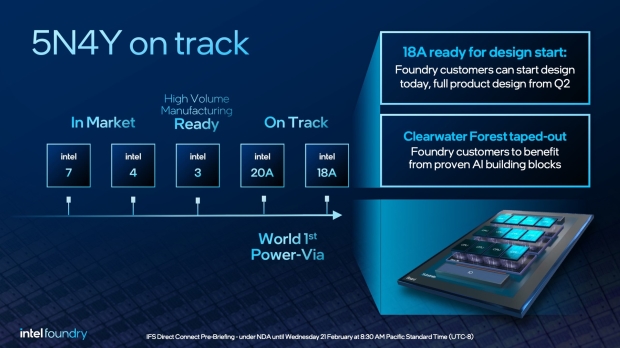




Intel hosted its first-ever Intel Foundry Direct Connect event, where the company added its new Intel 14A node to its extended process technology roadmap.

On the subject of AI, Intel CEO Pat Gelsinger said at the event: "AI is proudly transforming the world and how we think about technology and the silicon that powers it. This is creating an unprecedented opportunity for the world's most innovative chip designers and for Intel Foundry, the world's first systems foundry for the AI era. Together, we can create new markets and revolutionize how the world uses technology to improve people's lives".
Intel provided new details on how it plans to push into the lead ahead of TSMC (Taiwan Semiconductor Manufacturing Company) into 2026 and beyond. Intel wants to retake the mantle of making the world's fastest chips away from TSMC later this year with its upcoming Intel 18A process node, and then in 2026, it says it will push further into the lead with its next-gen Intel 14A process node.
- Read more: Analyst: TSMC the world's biggest semiconductor maker by revenue: beats Intel, Samsung, NVIDIA
- Read more: TSMC aims for next-gen 1nm-class monolithic chips with 1 trillion transistors by 2030
- Read more: TSMC is so ahead of the game, Samsung might not catch up until 2030
- Read more: Samsung aims for 2030 to beat TSMC's foundry business dominance
Back in the day, Intel only made chips for itself in the form of Pentium, Celeron, Core CPUs, and more... but it has been outsourcing some of its next-gen designs to TSMC. The company that is making some of their more advanced processors, will now be a competitor to Intel Foundry, big time.
Intel has sourced billions of dollars from the US government and its CHIPS Act, with Intel securing big partners like Microsoft, Arm, Broadcom, and others to have their chips made by Intel Foundry. Intel is taking the next-gen chip battle to TSMC, and it has a serious war chest to make it happen.