



The building blocks of life have been discovered within asteroid samples recovered by Japan's Hayabusa2 mission that returned to Earth back in 2020.
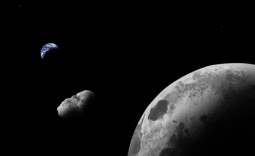
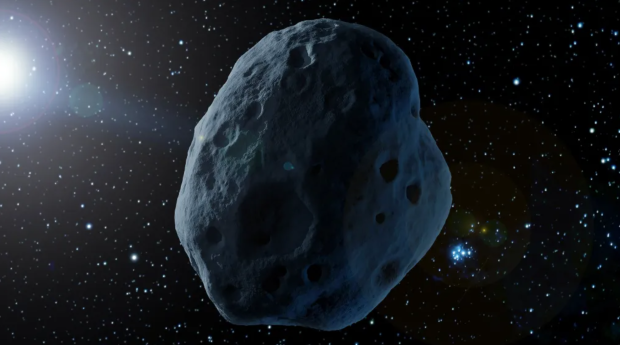
The Hayabusa2 mission involved a lengthy trip to the asteroid known as Ryugu, a near-Earth asteroid that is nearly 3,000 feet wide and was originally discovered in 1999. JAXA, Japan's version of NASA, sent a spacecraft to collect samples of the asteroid, and since those samples arrived back on Earth, they have undergone analysis by multiple researchers and scientists.
Now, a team of researchers has discovered evidence the samples contain organic matter, providing further weight to the theory asteroids were the transportation system of organic molecules to planets such as Earth. The team behind the study explained that since Ryugu has no atmosphere, it's prone to enduring micrometeoroid impacts that change the surface composition and the minerals within the asteroid.
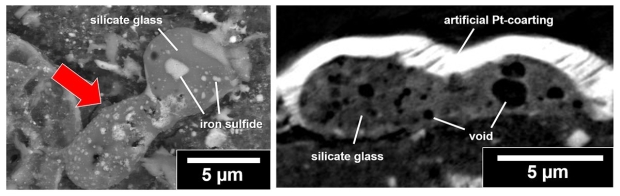
The team found within the Ryugu samples the asteroid "melt splashes" created by pieces of cometary dust. These impacts are high impact on a small scale, creating heat that is then rapidly cooled to form these "melt splashes".
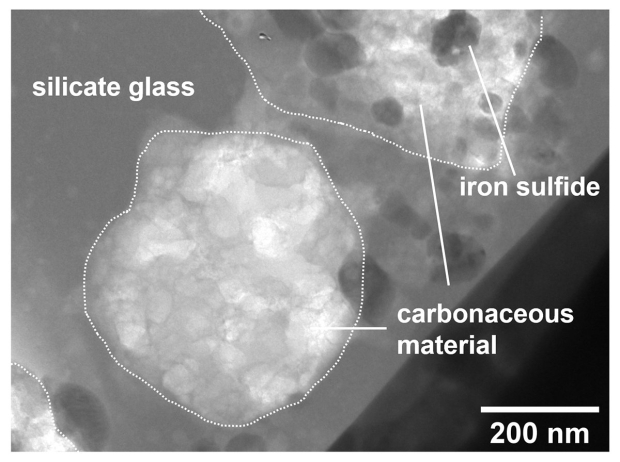
"The voids correspond to the water vapor released from the Ryugu's hydrous silicates and subsequently captured in the melt splashes," reads the post
"Analysis also revealed small carbonaceous materials with abundant nano-pores and iron sulfide inclusions in the melt splashes. The carbonaceous materials are texturally similar to primitive organic matter in cometary dust, though they lack nitrogen and oxygen, making them chemically different from organic matter," added the researchers
"We propose that the carbonaceous materials formed from cometary organic matter via the evaporation of volatiles, such as nitrogen and oxygen, during the impact-induced heating. This suggests that cometary matter was transported to the near-Earth region from the outer solar system," adds Matsumoto. "This organic matter might be the small seeds of life once delivered from space to Earth."
![Photo of the PlayStation Store Gift Card [Digital Code]](https://m.media-amazon.com/images/I/41cEZpeUA1L._SL160_.jpg)