









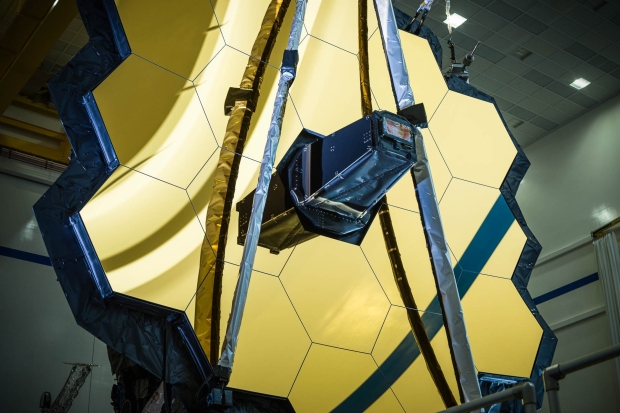




NASA has released a collection of images snapped by the incredibly impressive James Webb Space Telescope (JWST), the world's most powerful space telescope that cost more than $10 billion.
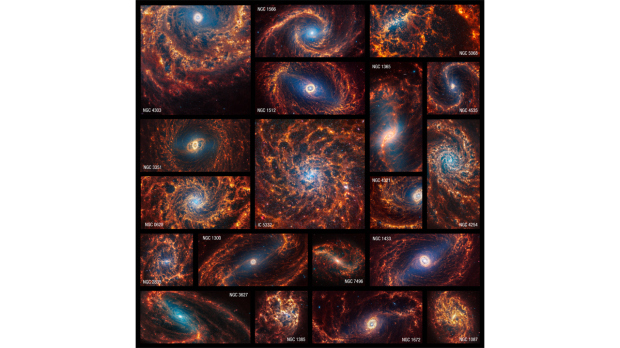
From its distant vantage point in space, NASA's Webb has honed its extremely sensitive instruments on a selection of spiral galaxies, revealing them in unprecedented detail for the world to see. The above image is a mosaic of all of the spiral galaxies Webb has imaged, and while many of these galaxies, if not all of them, have been previously studied by astronomers, many are still enthralled by the level of detail Webb can achieve as the observatory's images show parts of the spiral galaxies that have never been seen before.
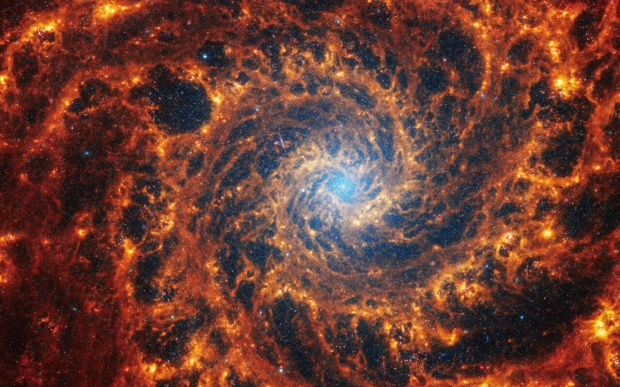
One of the sought-after aspects of these images is the capture of millions of newborn stars, which populate the spiral arms of these galaxies.
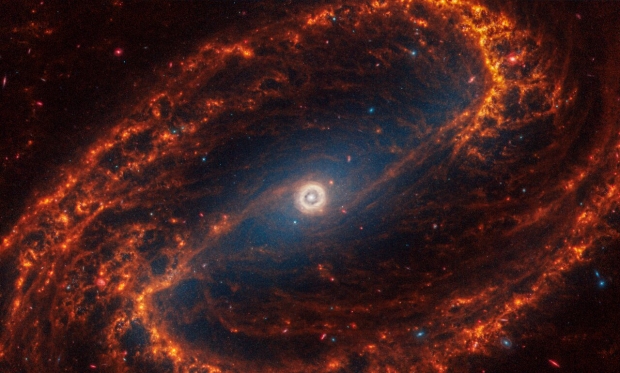
"Webb's NIRCam (Near-Infrared Camera) captured millions of stars in these images, which sparkle in blue tones. Some stars are spread throughout the spiral arms, but others are clumped tightly together in star clusters," writes NASA
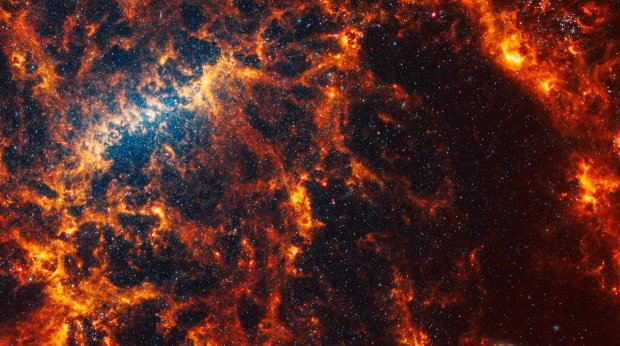
The telescope's MIRI (Mid-Infrared Instrument) data highlights glowing dust, showing us where it exists around and between stars. It also spotlights stars that haven't yet fully formed - they are still encased in the gas and dust that feed their growth, like bright red seeds at the tips of dusty peaks.
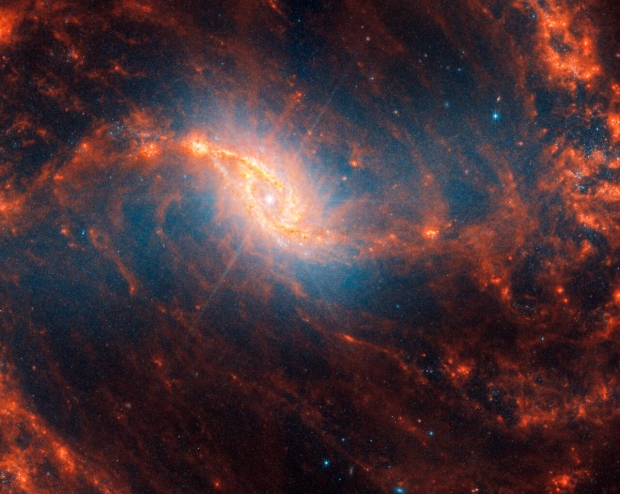
Webb's images show large, spherical holes within the spiral arms of the galaxy, which, according to astronomers, is evidence of a past supernova.
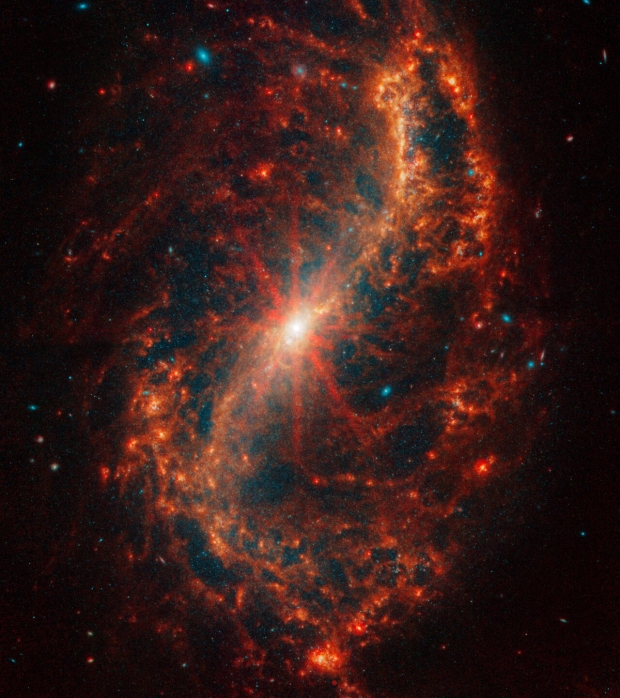
"These holes may have been created by one or more stars that exploded, carving out giant holes in the interstellar material," explained Adam Leroy, a professor of astronomy at the Ohio State University in Columbus.
![Photo of the PlayStation Store Gift Card [Digital Code]](https://m.media-amazon.com/images/I/41cEZpeUA1L._SL160_.jpg)


 Scientists unveil biggest map of the universe ever created, spanning almost all of time
 NASA releases jaw-dropping 2.5 billion pixel image that took 10 years to capture
 Gigantic solar eruption captured blasting into space in stunning 4K video
 World's most powerful telescope spots an 'Eye of Sauron' in deep space
 NASA telescope photographs planet-transforming grains in deep space
 Iconic N64 shooter GoldenEye 007 is getting a native PC port
 Diablo 4 is coming to the Switch 2 with both expansions in a special Age of Hatred Collection
 CXMT DDR5 memory hits 9,000 MT/s speed milestone on AMD AM5 motherboard
 Sony says PlayStation 6 release date and pricing are still up in the air
 Lexar's DRAM-less Thor Ultra series PCIe Gen 5 SSDs are built for desktop and laptop PC gaming
 Gaming monitors are next in line for a price hike as manufacturers can no longer absorb costs
 Linux 7.2 makes TSC support mandatory for x86 CPUs, but it's not like Windows 11's TPM 2.0 check
 ChatGPT can now build a timeline of everything you do on your Mac
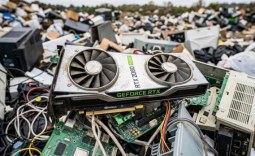 Redditor finds a working RTX 2080 Super in the dump, gets a huge free upgrade
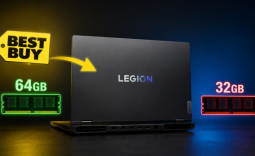 Redditor sends a gaming laptop with 64GB RAM for repair, comes back with 32GB RAM
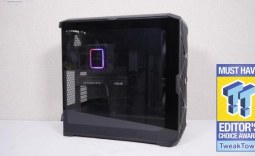 Cooler Master HAF II 500 Mid-Tower Chassis Review
 Corsair HS35 v3 Wireless Gaming Headset Review - An Affordable Winner
 D-Link F518 5G Wi‑Fi 6 AX1800 Mobile Hotspot Review: All-Day Mobile Hotspot
 Bose Lifestyle Ultra Speaker Review - Impressively Detailed Room-Filling Sound
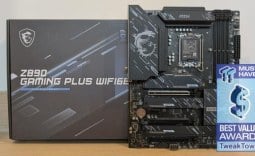 MSI Z890 Gaming Plus WIFI6E Review - Z890 for under $200
 Mortal Kombat (1995) 4K Ultra HD Blu-ray Review
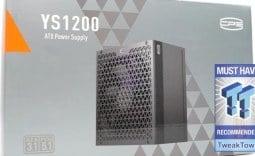 CPS PCCOOLER YS1200 ATX 3.1 80 PLUS Gold PSU Review
 ASRock X870E Taichi White Review: a premium AM5 motherboard with 10G LAN and WiFi 7
 Asetek Initium Pedal Modular Upgrades Review
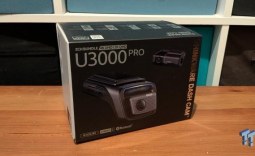 Thinkware U3000 Pro Review - Smart Dashcam with Wi-Fi quirks
 Using Multiple Monitors? Change these Windows settings for a Better Experience
 Windows Sandbox is The Windows Security Feature Most People Never Use
 I ditched the Windows 11 context menu for this open-source tool, and here's why
 Windows 11 may be encrypting your drive already, and I checked where my recovery key went
 GIGABYTE's 40 Days of INFINITY celebrates 40 Years of Innovation with stunning GeForce RTX graphics cards and rewards
 I swapped File Explorer for this free file manager and finally got the layout I wanted
 How to tell if someone has been using your Windows PC without your permission
 6 Task Manager tips for troubleshooting Windows performance problems
 ASUS ROG's 20th Anniversary Line-up of Premium PC Gaming Gear has Arrived - Here's Everything You Need to Know
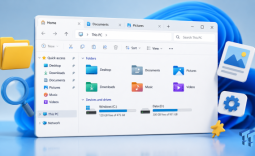 Six File Explorer tips every Windows user should know