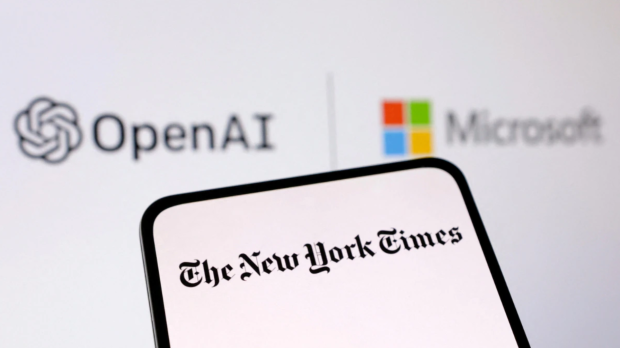




OpenAI has taken to its blog to call out The New York Times over the publications lawsuit filed against the AI developer.
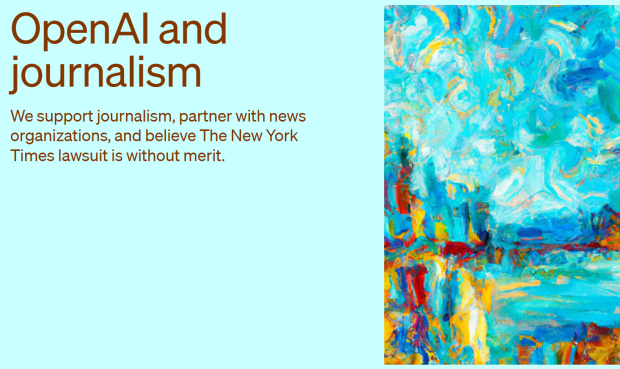
The lawsuit filed against OpenAI by The New York Times claims the AI developer's ChatGPT service reproduced New York Times stories verbatim, which OpenAI has now fired back against, writing the Times "is not telling the full story". The developers behind ChatGPT argue that the Times had entered specific prompts to get ChatGPT to reproduce an article the way the publication was claiming.
"Even when using such prompts, our models don't typically behave the way The New York Times insinuates, which suggests they either instructed the model to regurgitate or cherry-picked their examples from many attempts," wrote OpenAI
Notably, the Times failed to show examples of ChatGPT reproducing articles before it filed a lawsuit against OpenAI, with the AI developer also adding that the article cited by the Times "appear to be from year-old articles that have proliferated on multiple third-party websites."
OpenAI has stuck to its guns once again by pushing its argument that for AI technology to become better, more sophisticated, and more complex, it requires the "enormous aggregate of human knowledge," and while the company respects copyrighted works by providing users opt-out options for data tracking, it ultimately believes AI models that generate content using unoriginal content fall under the fair use rules that authorize the repurposing of copyrighted works.
However, the Times' lawyer doesn't see it that way.
"The blog concedes that OpenAI used the Times's work, along with the work of many others, to build ChatGPT. As the Time's complain states, 'through Microsoft's Bing Chat (recently rebranded as Copilot) and OpenAI's ChatGPT, defendants seek to free-ride on the Time's massive investment in its journalism by using it to build substitutive products without permission or payment,'" Ian Crosby, partner at Susman Godfrey and lead counsel for the Times, said in a statement sent to The Verge. "That's not fair use by any measure."