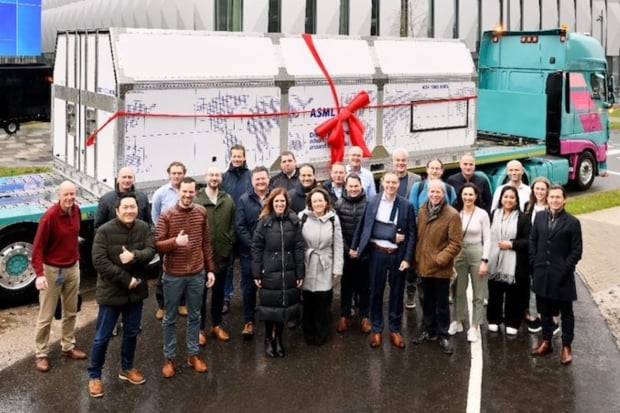




ASML has just officially shipped its very first High-NA EUV lithography scanner to Intel, with the sparkling new Twinscan EXE:5000 extreme ultraviolet (EUV) scanner being the first High-NA scanner from the company and now in the hands of Intel.
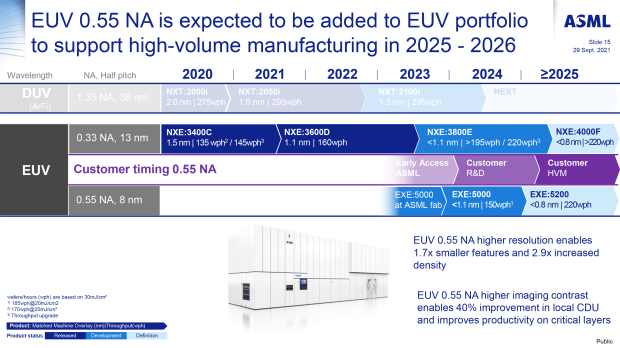
Intel placed its order with ASML for the advanced EUV scanner all the way back in 2018, where Team Blue will be playing around with the new High-NA EUV scanner before it uses the commercial-grade Twinscan EXE:5200 tool for high-volume manufacturing (HVM), which is expected to take place in 2025.
An ASML spokesperson said: "We are shipping the first High NA system and announced this in a social media post today. It goes to Intel as planned and announced earlier".
The brand new ASML Twinscan EXE:5000 High-NA scanner will be moved from Veldhoven in the Netherlands to Intel's facility located near Hillsboro, Oregon, USA. It's a huge device, requiring 13 truck-sized containers and 250 crates just to make its journey to the United States.
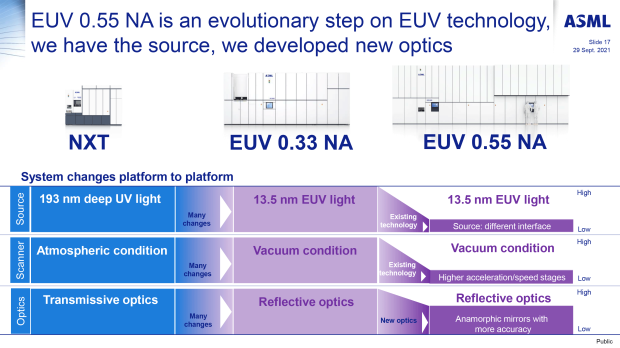
Furthermore, once it's fully assembled, the new EUV scanner will be 3 stories tall, forcing Intel to build a new -- and even taller -- fab expansion just to house ASML's new creation. It's also estimated that each of ASML's new High-NA EUV scanners is worth somewhere between $300 million and $400 million.
Current EUV tools use a 13nm resolution, while the new High Numerical Aperture (High-NSA) EUV lithography tools feature a 0.55 NA lens that is capable of an 8nm resolution. We should expect these next-gen High-NA EUV scanners to be one of the most important parts of next-gen chip production once we move past 3nm, which is expected to take place between 2025-2026.
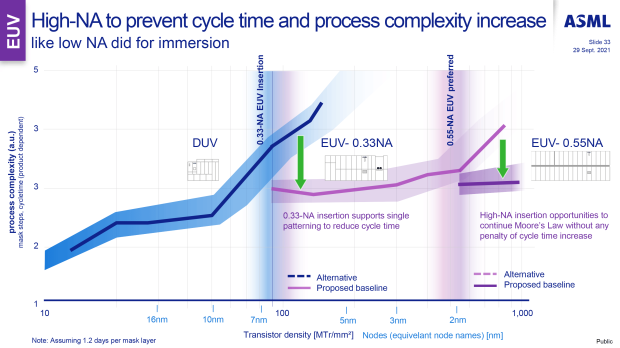
This will allow fabs to move away from EUV double patterning, which AnandTech explains "greatly reduces complexity while potentially enhancing yields and lowering costs". This is great news for companies making some of the most advanced tech in the world, especially for Intel moving forward and its multi-faceted battle against AMD and NVIDIA.