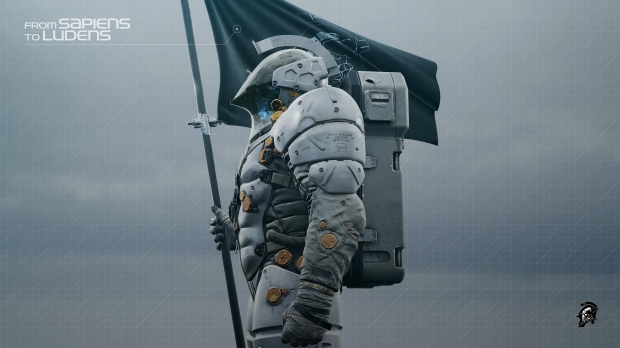





Kojima Productions enters its 8th year of independence as the Metal Gear Solid creator confirms the next phase of expansion is underway.
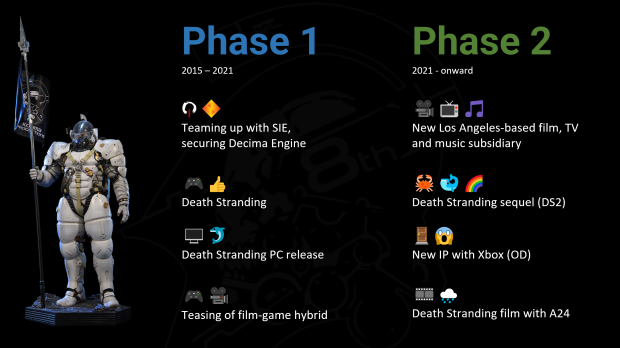
Hideo Kojima's independent studio is growing. Since establishment in 2015, Kojima Productions has teamed up with Sony Interactive Entertainment and 505 Games to release Death Stranding on PS4, PS5, and PC, reaching 16 million players on all platforms (Game Pass included). This is part of KojiPro's Phase 1 development.
The studio is now in Phase 2, which sees major expansion points into new territories. On the more traditional front, KojiPro is making Death Stranding 2 for PlayStation 5. Kojima is very interested in exploring uncharted waters, though, and opened a new Los Angeles-based subsidiary focused on film, music, and TV. This branch is working alongside movie production company A24 on a new Death Stranding film adaptation.
"Now, KJP has entered the '2nd phase.' We have expanded our studio and strengthened our crew to develop our existing IP (DEATH STRANDING) into a franchise (multi-publishing, sequel production, film adaptation) and our next challenge, a new IP, OD," Hideo Kojima said on Twitter.
Phase 2 also includes highly experimental interactive experiences.
Since 2019, Kojima has talked about his desire to make a film-game hybrid in the horror genre--an idea that directly manifested into OD, a new cloud-based game that's being published by Xbox. OD is indeed a horror game with emphasis on thrilling suspense and shocking visuals.
Across the last 8 years, Kojima Productions has filed for three eye-catching trademarks that denote what its games and projects are all about: Social Strand System (Death Stranding), Social Scream System (OD), Social Stealth System (potentially OD and/or Death Stranding 2)
What's most interesting about Kojima Production's expansion is that its various divisions are so synergistic with one another. Kojima's LA branch is a critical hotspot for Hollywood talent, and actors are used in both AAA games and films. This kind of crossover is somewhat rare in the industry, especially as most video game developers and studios are focused solely on games and not transmedia content.