









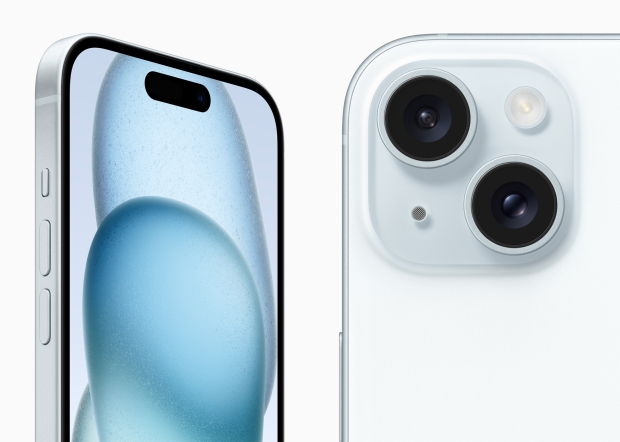




If you own a current Mac laptop like the excellent MacBook Air or the powerful MacBook Pro, you only have a couple of options in terms of getting online. The first is to use a Wi-Fi network like the one at home or at work for example. The other is to use your iPhone and connect to its hotspot and tether that way. But that can be expensive if you don't have the right plan. However, Apple could be about to add a third option and it'll all be thanks to a new piece of hardware.
That hardware will of course be a new 5G modem, with Bloomberg's Mark Gurman reporting that Apple is working on bringing such a thing to future MacBooks. There have been rumors to this effect in the past, but this is the closest that we've come to hearing something more concrete - because Gurman has a timeframe.
Gurman shared the timeframe in his weekly Power On newsletter, saying that Apple intends to be able to put a 5G modem of its own design in the future. But only after it's brought its own modem to the iPhone. That's likely to happen in 2026, which means that we are unlikely to see Apple's 5G modem make its laptop debut until 2028 or 2029. That means that there's still quite a while to wait.
This is all against a backdrop in which Apple has been trying to ditch Qualcomm for its iPhone modems for years. Apple bought Intel's modem business for $1 billion in 2019 but has been unable to turn that into a modem that it can use in its devices so far. Gurman suggests that the previous plan to ditch the Qualcomm Snapdragon modems in 2025 now seems unlikely to come to fruition, leaving Apple to wait until 2026. However, that's problematic because Apple's already extended its deal with Qualcomm once and that deal comes to a close in the same year - 2026. That could mean Apple will have to go to Qualcomm cap in hand to extend the deal once more, and it isn't clear what terms that might be under given Qualcomm is likely well aware of the sticky situation Apple has found itself in.
Apple's plans to use its own iPhones have reportedly faced miniaturization issues of late, with the chip simply being too big to fit into its iPhones. That constraint wouldn't be so tight in a MacBook, but it still seems that Apple wants to use its modems in the iPhone first.


 Apple's new M5 MacBook Air laptops rumored with in-house Wi-Fi chip, Bluetooth also possible
 MacBook with OLED again rumored for 2026, with Samsung set to join Apple's display suppliers
 Apple iPhone 17e release 'imminent' says insider, M5 Pro and M5 Max MacBook Pros very soon
 Apple's MacBook Pro M6 OLED could be a touchscreen model - and not everyone's happy
 MacBook Neo sets new sales record for 'first-time' Mac buyers
 Xbox CEO sees Elder Scrolls VI live, teases RPG's 'incredible' scale
 Aliens: Fireteam Elite shut down on Switch shows why gamers are fighting Sony's disc-free future
 OpenAI, Meta and Google workers say AI jobs mean 90-hour weeks, not the four-day workweek companies promised
 Leaked images show Lenovo ThinkBook with horizontally expanding display
 Valve warns Steam Machine and Steam Controller buyers in Europe to expect fake messages after logistics partner got hacked
 Spider-Man Brand New Day helps boost sales for Marvel's Spider-Man 2, revenue climbs past $1.2B
 Microsoft raises the price of Windows OEM licenses by up to 10%
 Modder builds liquid cooling system for Steam Machine reducing CPU and GPU temps by up to 30C
 RTX 4080 graphics cards with 32GB VRAM spotted in China's second-hand GPU market
 Giveaway: Win an Ocypus Sigma L36 PRO 360mm AIO and Sigma F36 ARGB Fan
 Bose Lifestyle Ultra Speaker Review - Impressively Detailed Room-Filling Sound
 MSI Z890 Gaming Plus WIFI6E Review - Z890 for under $200
 Mortal Kombat (1995) 4K Ultra HD Blu-ray Review
 CPS PCCooler YS1200 ATX 3.1 80 PLUS Gold PSU Review
 ASRock X870E Taichi White Review: a premium AM5 motherboard with 10G LAN and WiFi 7
 Asetek Initium Pedal Modular Upgrades Review
 Thinkware U3000 Pro Review - Smart Dashcam with Wi-Fi quirks
 Montech TG3 Mid-Tower Chassis Review
 ASUS ROG Strix X870E-A Gaming WiFI7 Neo Review - A New Enticing Option
 Noctua NL-LC1-36 Liquid CPU Cooler Review
 Windows 11 may be encrypting your drive already, and I checked where my recovery key went
 GIGABYTE's 40 Days of INFINITY celebrates 40 Years of Innovation with stunning GeForce RTX graphics cards and rewards
 I swapped File Explorer for this free file manager and finally got the layout I wanted
 How to tell if someone has been using your Windows PC without your permission
 6 Task Manager tips for troubleshooting Windows performance problems
 ASUS ROG's 20th Anniversary Line-up of Premium PC Gaming Gear has Arrived - Here's Everything You Need to Know
 Six File Explorer tips every Windows user should know
 I switched my PC to encrypted DNS in Windows 11, and browsing felt more private
 Printer Not Working in Windows? How to fix detection, print queues and drivers
 The Ultimate Guide to Personalizing Your Windows 11 Taskbar