














Microsoft has released DirectStorage 1.2 as part of the DirectStorage SDK, bringing several new features to the technology designed to improve game load times. Namely, support for older hard drives in the form of a new ability to open files in buffered mode that will benefit from "OS file buffering features."
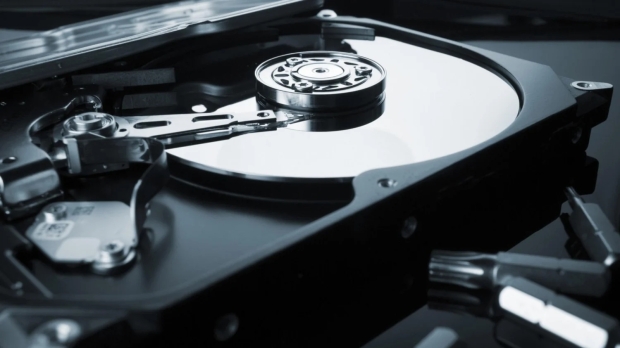
What's DirectStorage? Well, it's a Microsoft technology designed to help games load faster with the aid of NVMe storage and PCIe Gen 4 speeds. With the visual fidelity of games increasing and things like textures, character models, and other files getting larger, handling all of that data can be a challenge.
DirectStorage bypasses the need for game files and decompression to go from an SDD to RAM to the CPU and GPU. It shifts the load to the GPU so files and data can be quickly decompressed and accessed. It's similar to Microsoft's Xbox Velocity Architecture that debuted with the Xbox Series X|S, which led to games loading in seconds versus upwards of a minute or longer.
What does this mean for legacy hard drives and slower storage? How DirectStorage works can also benefit older drives, but they require buffered IO to reduce load times. And so, Microsoft is adding the "ForceFileBuffering" feature, though it notes "this feature should only be enabled for slower HDD drives that will benefit from the OS file buffering features."
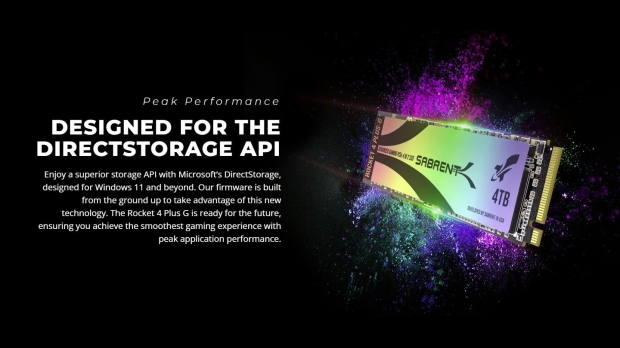
DirectStorage 1.2 isn't just about adding support to older HDDs, as there are performance improvements, bug fixes, and new tools for developers to monitor how DirectStorage is performing in games. You can read the full Changelog here.
In the world of PC games, DirectStorage is still relatively new, with the first game to use the technology being Square Enix's Forspoken - which was released earlier this year.


 3DMark introduces a new DirectStorage SSD benchmark for modern SSDs and games
 Corsair intros its new flagship MP700 PRO XT Gen5 SSD: up to 14.9GB/sec reads
 You can now play GTA 5 on PC with next-gen visuals - at no additional cost
 KLEVV GENUINE G560 PCIe Gen5 SSD is passively cooled and reaches up to 14,000 MB/s speed
 PNY's new high-performance CS2150 Gen5 SSD pumps 10.3GB/sec reads, starts at just $99
 Redditor finds a working RTX 2080 Super in the dump, gets a huge free upgrade
 Redditor sends a gaming laptop with 64GB RAM for repair, comes back with 32GB RAM
 GPU Tweak III can now detect and shut down a PC when a 12V-2x6 graphics card goes over a certain current limit
 CPS PCCOOLER unveils all-in-one modular PC where you can replace the display and upgrade its hardware
 NVIDIA and LG are building a next-generation humanoid robot that will make its debut at CES 2027
 Intel will continue supplying Raptor Lake CPUs for 'years to come' thanks to the memory crisis
 NVIDIA's next-gen 'Feynman' GPUs to be built with TSMC's 1.6 nm A16 process
 OLED monitor shipments have doubled in a year, with ASUS as the global leader
 SK Hynix is running out of SSD replacements, leaving customers with inadequate refunds
 Kingdom Hearts 4 reveals Pixar's Coco-inspired Land of the Dead world and late 2027 release window
 Cooler Master HAF II 500 Mid-Tower Chassis Review
 Corsair HS35 v3 Wireless Gaming Headset Review - An Affordable Winner
 D-Link F518 5G Wi‑Fi 6 AX1800 Mobile Hotspot Review: All-Day Mobile Hotspot
 Bose Lifestyle Ultra Speaker Review - Impressively Detailed Room-Filling Sound
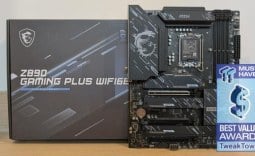 MSI Z890 Gaming Plus WIFI6E Review - Z890 for under $200
 Mortal Kombat (1995) 4K Ultra HD Blu-ray Review
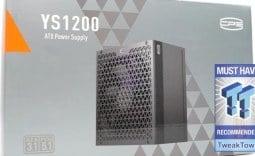 CPS PCCOOLER YS1200 ATX 3.1 80 PLUS Gold PSU Review
 ASRock X870E Taichi White Review: a premium AM5 motherboard with 10G LAN and WiFi 7
 Asetek Initium Pedal Modular Upgrades Review
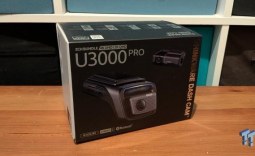 Thinkware U3000 Pro Review - Smart Dashcam with Wi-Fi quirks
 Windows Sandbox is The Windows Security Feature Most People Never Use
 I ditched the Windows 11 context menu for this open-source tool, and here's why
 Windows 11 may be encrypting your drive already, and I checked where my recovery key went
 GIGABYTE's 40 Days of INFINITY celebrates 40 Years of Innovation with stunning GeForce RTX graphics cards and rewards
 I swapped File Explorer for this free file manager and finally got the layout I wanted
 How to tell if someone has been using your Windows PC without your permission
 6 Task Manager tips for troubleshooting Windows performance problems
 ASUS ROG's 20th Anniversary Line-up of Premium PC Gaming Gear has Arrived - Here's Everything You Need to Know
 Six File Explorer tips every Windows user should know
 I switched my PC to encrypted DNS in Windows 11, and browsing felt more private