














Student researchers have created what seems to be the first AR smart glasses powered by OpenAI's ChatGPT.
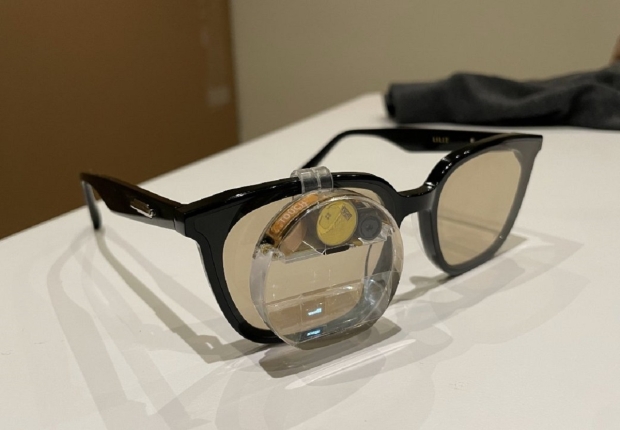
The pair of smart glasses were created by Stanford student Bryan Hau-Ping Chiang, who took to Twitter at the end of last month to reveal his creation and how it came to be. The Stanford student explained the smart glasses were powered by what he called "rizzGPT", which is able to provide real-time "charisma as a service". The smart glasses were built using OpenAI's GPT-4 language model, Whisper, and Monocle AR glasses that were provided by Brilliant Labs. Notably, the glasses feature a microphone, a high-resolution display, a camera, and the ability to output text.
Popular Now: Redditor sends a gaming laptop with 64GB RAM for repair, comes back with 32GB RAMThe researchers explain that they imagine a world in the future where there is ambient computing enabled through Augmented Reality (AR), possibly through glasses such as the ones created by the students. Chiang wrote on Twitter that this ambient computing would likely come to fruition with the combination of AR and AI. An example of this would be AI-powered smart glasses that have a personal assistant that can provide you additional information on-the-fly, it would be similar to having a God observe your life and tell you exactly what to do next and why.
Chiang details how the smart glasses were created through a simple graphic seen above. The image shows that the conversation audio is picked up by OpenAI Whisper, that then transcribes the audio into text, which is then fed into ChatGPT. Once the text is analyzed, ChatGPT generates a response that is sent to the AR monocle to be displayed to the user. It should be noted that this is a very barebones explanation, but for all intents and purposes, that's the general gist of how it works. The design seems to have worked with a slight delay in the response, as demonstrated in the above video.
The idea of combining AR and AI to create what only seems to be like a Tony Stark pair of smart glasses powered by your own personal Jarvis seems like it would be the next mobile phone moment. If the glasses were lightweight, had at least a 24-hour battery life, provided accurate additional information in real-time, connectivity between other users, and could adjust for light variation between outside and inside, there wouldn't be little reason left not to own a pair to assist you in your everyday life.

However, a pair of smart glasses with all of those aforementioned features would be extremely expensive, given the rate of development on smart glasses. For mass adoption of such a pair of smart glasses would have to be as much as the next standard iPhone, perhaps even cheaper.


 Meta smart glasses can be used to secretly identify people's faces
 Apple still cautiously working on standalone AR glasses after Vision Pro was a massive flop
 Vuebuds put AI in your ears with real-time visual awareness
 Meta confirms new Ray-Ban Meta AI glasses can harvest what wearers see
 Razer's Project Motoko turns AI smart glasses into a wireless headset
 Redditor finds a working RTX 2080 Super in the dump, gets a huge free upgrade
 Redditor sends a gaming laptop with 64GB RAM for repair, comes back with 32GB RAM
 GPU Tweak III can now detect and shut down a PC when a 12V-2x6 graphics card goes over a certain current limit
 CPS PCCOOLER unveils all-in-one modular PC where you can replace the display and upgrade its hardware
 NVIDIA and LG are building a next-generation humanoid robot that will make its debut at CES 2027
 Intel will continue supplying Raptor Lake CPUs for 'years to come' thanks to the memory crisis
 NVIDIA's next-gen 'Feynman' GPUs to be built with TSMC's 1.6 nm A16 process
 OLED monitor shipments have doubled in a year, with ASUS as the global leader
 SK Hynix is running out of SSD replacements, leaving customers with inadequate refunds
 Kingdom Hearts 4 reveals Pixar's Coco-inspired Land of the Dead world and late 2027 release window
 Cooler Master HAF II 500 Mid-Tower Chassis Review
 Corsair HS35 v3 Wireless Gaming Headset Review - An Affordable Winner
 D-Link F518 5G Wi‑Fi 6 AX1800 Mobile Hotspot Review: All-Day Mobile Hotspot
 Bose Lifestyle Ultra Speaker Review - Impressively Detailed Room-Filling Sound
 MSI Z890 Gaming Plus WIFI6E Review - Z890 for under $200
 Mortal Kombat (1995) 4K Ultra HD Blu-ray Review
 CPS PCCOOLER YS1200 ATX 3.1 80 PLUS Gold PSU Review
 ASRock X870E Taichi White Review: a premium AM5 motherboard with 10G LAN and WiFi 7
 Asetek Initium Pedal Modular Upgrades Review
 Thinkware U3000 Pro Review - Smart Dashcam with Wi-Fi quirks
 Windows Sandbox is The Windows Security Feature Most People Never Use
 I ditched the Windows 11 context menu for this open-source tool, and here's why
 Windows 11 may be encrypting your drive already, and I checked where my recovery key went
 GIGABYTE's 40 Days of INFINITY celebrates 40 Years of Innovation with stunning GeForce RTX graphics cards and rewards
 I swapped File Explorer for this free file manager and finally got the layout I wanted
 How to tell if someone has been using your Windows PC without your permission
 6 Task Manager tips for troubleshooting Windows performance problems
 ASUS ROG's 20th Anniversary Line-up of Premium PC Gaming Gear has Arrived - Here's Everything You Need to Know
 Six File Explorer tips every Windows user should know
 I switched my PC to encrypted DNS in Windows 11, and browsing felt more private