









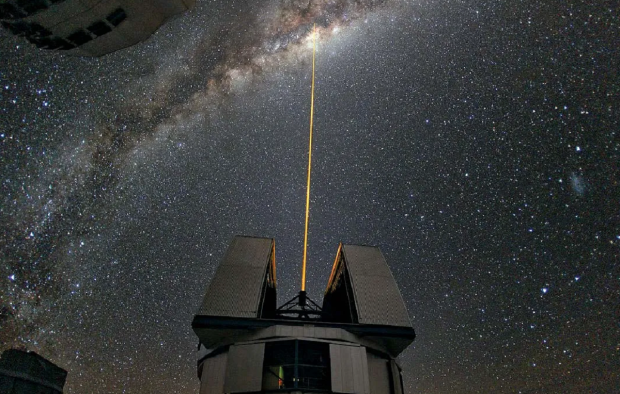




Keeping to the Halloween theme, the European Southern Observatory (ESO) has released a phenomenal image of the ghost of a once giant star.
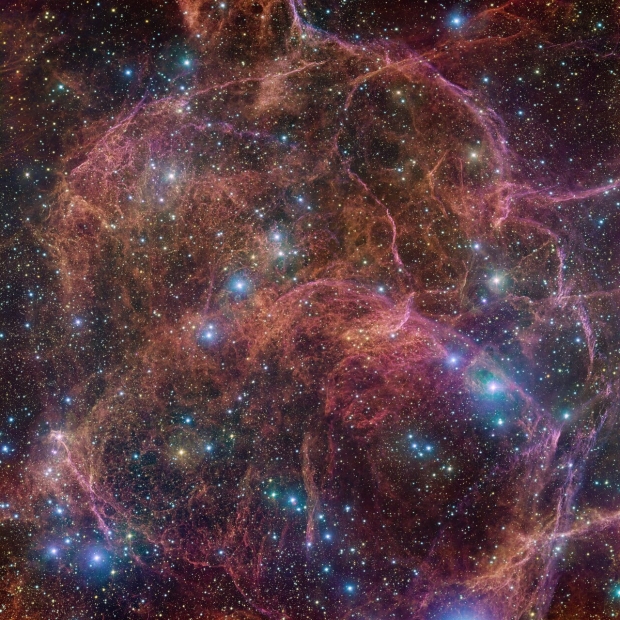
The ESO has taken to its website to explain that the above image features the nebula called the Vela Supernova Remnant, which was captured by the ESO-run Very Large Telescope in Chile. The Vela Supernova Remnant is the remains of a once massive star that ended its life via a powerful explosion called a supernova.
This explosion happened approximately 11,000 years ago, and once it occurred, the shock waves moved through the surrounding gas in the area, compressing it and creating the strange tendrils seen scattered through the above image. So, when does a supernova happen? Simply, a supernova happens when a massive star, some fifteen times larger than our Sun, runs out of the fuel it needs to keep burning (hydrogen and helium). This lack of fuel causes the outer layers of the star to rapidly close in on the star's core, eventually forming a neutron star.
"As it exploded, the outermost layers of the progenitor star were ejected into the surrounding gas, producing the spectacular filaments that we observe here. What remains of the star is an ultra-dense ball in which the protons and electrons are forced together into neutrons - a neutron star. The neutron star in the Vela remnant, placed slightly outside of this image to the upper left, happens to be a pulsar that spins on its own axis at an incredible speed of more than 10 times per second," writes the ESO.
The Vela Supernova Remnant is located 800 light years away from Earth and is one of the closest known supernova remnants that has been discovered. Notably, the ESO writes that the above image contains 554 million pixels and that nine full moons would be able to fit within this image.


 NASA lifts the veil on the corpse of a star about 20 times as big as the Sun
 NASA captures a 'boom' in space from 600 million light years away
 NASA telescope photographs planet-transforming grains in deep space
 NASA releases jaw-dropping 2.5 billion pixel image that took 10 years to capture
 Scientists unveil breathtaking 100 mile per pixel photograph of the Sun
 CPS PCCOOLER unveils all-in-one modular PC where you can replace the display and upgrade its hardware
 NVIDIA and LG are building a next-generation humanoid robot that will make its debut at CES 2027
 Intel will continue supplying Raptor Lake CPUs for 'years to come' thanks to the memory crisis
 NVIDIA's next-gen 'Feynman' GPUs to be built with TSMC's 1.6 nm A16 process
 OLED monitor shipments have doubled in a year, with ASUS as the global leader
 SK Hynix is running out of SSD replacements, leaving customers with inadequate refunds
 Kingdom Hearts 4 reveals Pixar's Coco-inspired Land of the Dead world and late 2027 release window
 Budget GPU shortages to get even worse in second half of 2026, warns PC Partner
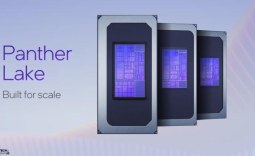 Intel plans an entry-level Panther Lake chip with 4 Xe3 cores for handhelds
 AMD denied any review samples for the Radeon RX 9050 because it's embarrassing
 Cooler Master HAF II 500 Mid-Tower Chassis Review
 Corsair HS35 v3 Wireless Gaming Headset Review - An Affordable Winner
 D-Link F518 5G Wi‑Fi 6 AX1800 Mobile Hotspot Review: All-Day Mobile Hotspot
 Bose Lifestyle Ultra Speaker Review - Impressively Detailed Room-Filling Sound
 MSI Z890 Gaming Plus WIFI6E Review - Z890 for under $200
 Mortal Kombat (1995) 4K Ultra HD Blu-ray Review
 CPS PCCOOLER YS1200 ATX 3.1 80 PLUS Gold PSU Review
 ASRock X870E Taichi White Review: a premium AM5 motherboard with 10G LAN and WiFi 7
 Asetek Initium Pedal Modular Upgrades Review
 Thinkware U3000 Pro Review - Smart Dashcam with Wi-Fi quirks
 Windows Sandbox is The Windows Security Feature Most People Never Use
 I ditched the Windows 11 context menu for this open-source tool, and here's why
 Windows 11 may be encrypting your drive already, and I checked where my recovery key went
 GIGABYTE's 40 Days of INFINITY celebrates 40 Years of Innovation with stunning GeForce RTX graphics cards and rewards
 I swapped File Explorer for this free file manager and finally got the layout I wanted
 How to tell if someone has been using your Windows PC without your permission
 6 Task Manager tips for troubleshooting Windows performance problems
 ASUS ROG's 20th Anniversary Line-up of Premium PC Gaming Gear has Arrived - Here's Everything You Need to Know
 Six File Explorer tips every Windows user should know
 I switched my PC to encrypted DNS in Windows 11, and browsing felt more private