














Archaeologists in Prague are rejoicing at the discovery of a monumental building that is estimated to have been built 7,000 years ago.

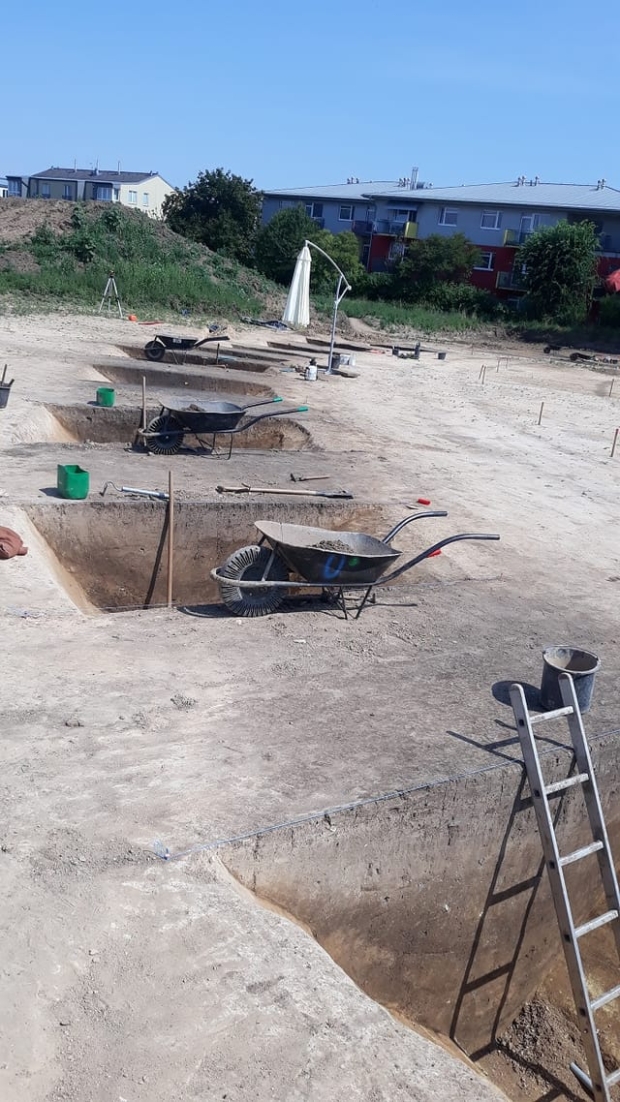
Experts discovered the large building more accurately described as a roundel in Prague's district of Vinor, and according to researchers working at the dig, the relic of a past time is in extremely good condition. A roundel is a large circular structure from the Neolithic period between 4600 and 4900 BC. These structures are much older than the Great Pyramids of Giza or Stonehenge, which are estimated to have been constructed from 2550 to 2490 B.C and 2,500 BC, respectively.
Miroslav Kraus, who is in charge of the research, explains that despite the extreme significance of such a structure being discovered, researchers are yet to identify what roundels were actually used for. Kraus gave one theory to reporters, which suggests that these large structures could have been a focal point for trade, much like a market, or religious cults used them to perform rites of passage.
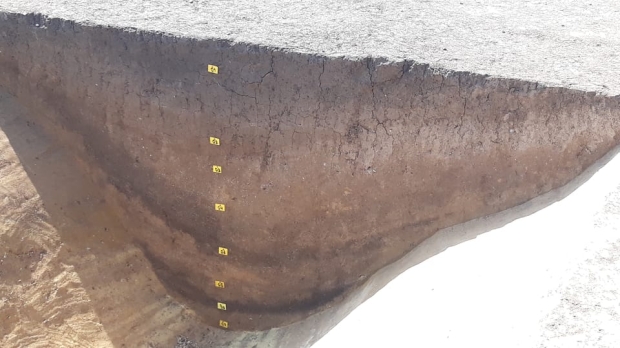
"It would be great to discover something that would indicate the actual function of the building. However, it is very unlikely, since none of the previously researched roundels had revealed such information. It would also be great to find something that would suggest its real age. So far, radiocarbon dating of samples collected from roundels has put their age somewhere between 4900 years to 4600 BC. That is a pretty wide time span," said Kraus.
"One of such theory is that it could have been used as an economic centre, a centre of trade. It could also have been a centre of some religious cult, where rites of passage or rituals connected to the time of year were performed. Roundels were built during the Stone Age, when people had not yet discovered iron. The only tools they could use were made of stone and animal bones," added Kraus.



 250-year-old lost city discovered in Amazon rainforest by advanced technology
 NASA telescope discovers cosmic fossil lurking in deep space
 Former NVIDIA engineer uses A100 GPU to discover world's largest prime number
 NASA discovers seven objects that look like asteroids but act like comets
 Scientists confirm they can now make large quantities of water from lunar soil
 CPS PCCOOLER unveils all-in-one modular PC where you can replace the display and upgrade its hardware
 NVIDIA and LG are building a next-generation humanoid robot that will make its debut at CES 2027
 Intel will continue supplying Raptor Lake CPUs for 'years to come' thanks to the memory crisis
 NVIDIA's next-gen 'Feynman' GPUs to be built with TSMC's 1.6 nm A16 process
 OLED monitor shipments have doubled in a year, with ASUS as the global leader
 SK Hynix is running out of SSD replacements, leaving customers with inadequate refunds
 Kingdom Hearts 4 reveals Pixar's Coco-inspired Land of the Dead world and late 2027 release window
 Budget GPU shortages to get even worse in second half of 2026, warns PC Partner
 Intel plans an entry-level Panther Lake chip with 4 Xe3 cores for handhelds
 AMD denied any review samples for the Radeon RX 9050 because it's embarrassing
 Corsair HS35 v3 Wireless Gaming Headset Review - An Affordable Winner
 D-Link F518 5G Wi‑Fi 6 AX1800 Mobile Hotspot Review: All-Day Mobile Hotspot
 Bose Lifestyle Ultra Speaker Review - Impressively Detailed Room-Filling Sound
 MSI Z890 Gaming Plus WIFI6E Review - Z890 for under $200
 Mortal Kombat (1995) 4K Ultra HD Blu-ray Review
 CPS PCCOOLER YS1200 ATX 3.1 80 PLUS Gold PSU Review
 ASRock X870E Taichi White Review: a premium AM5 motherboard with 10G LAN and WiFi 7
 Asetek Initium Pedal Modular Upgrades Review
 Thinkware U3000 Pro Review - Smart Dashcam with Wi-Fi quirks
 Montech TG3 Mid-Tower Chassis Review
 Windows Sandbox is The Windows Security Feature Most People Never Use
 I ditched the Windows 11 context menu for this open-source tool, and here's why
 Windows 11 may be encrypting your drive already, and I checked where my recovery key went
 GIGABYTE's 40 Days of INFINITY celebrates 40 Years of Innovation with stunning GeForce RTX graphics cards and rewards
 I swapped File Explorer for this free file manager and finally got the layout I wanted
 How to tell if someone has been using your Windows PC without your permission
 6 Task Manager tips for troubleshooting Windows performance problems
 ASUS ROG's 20th Anniversary Line-up of Premium PC Gaming Gear has Arrived - Here's Everything You Need to Know
 Six File Explorer tips every Windows user should know
 I switched my PC to encrypted DNS in Windows 11, and browsing felt more private