












Researchers and scientists have just make a major breakthrough when it comes to amputee patients and prosthetics.

Scientists at the University of Michigan have just had a breakthrough in mind-controlled prosthetics being used by patients. The new discovery has closed the gap between amputee patients thinking about moving a prosthetic limb, and the limb actually moving. According to Paul Cedena, a professor of biomedical engineering and Robert Oneal Collegiate Professor of Plastic Surgery at the U-M Medical School, "This is the biggest advance in motor control for people with amputations in many years."
Cedena continued, "We have developed a technique to provide individual finger control of prosthetic devices using the nerves in a patient's residual limb. With it, we have been able to provide some of the most advanced prosthetic control that the world has seen."
This is an extremely promising breakthrough for researchers and in particular, amputee patients. In the study, which was published in Science Translational Medicine, four amputee participants were required to pick up blocks with a pincer grasp. They were also asked to continually move their thumbs, lift spherical objects, and play Rock, Paper, scissors. According to one of the participants, Joe Hamilton, who happened to, unfortunately, lose his arm in a fireworks accident, " It's like you have a hand again. You can pretty much do anything you can do with a real hand with that hand. It brings you back to a sense of normalcy."
If you are interested in reading more on this new discovery, check out this link here.


 Scientists 'racing' to create the first AI for animal-to-human translation
 Official Doomsday Clock moved to 89 seconds to midnight, closest it's ever been
 The future is here: Hong Kong scientists are now 3D printing organs for transplant patients
 Scientists discover naturally impossible color by hacking a human eye
 How Synology is helping businesses achieve digital sovereignty in the AI era
 Windows 11 weather app uses more than 1GB RAM on its own
 GTA 6 is marketing on Netflix to reach gamers who aren't locked in to buy on day 1, says insider
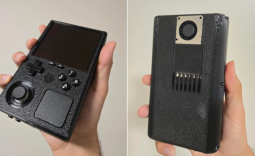 Modder crams Steam Deck hardware inside a GameBoy chassis, creating the SteamBoy
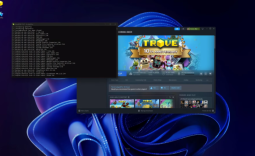 Modders figure out how to enable Windows taskbar in GeForce NOW session
 GEEKOM IT13 MAX deal, save big on this powerful Intel Core Ultra 9 Mini PC with this Back-to-School offer
 Pilot a mech in this unreleased Quake 4 expansion discovered on an old hard drive
 Family turns down $26 million to turn farmland into an AI data center
 Blizzard is now Xbox and Microsoft's 'top performing' game studio, new report
 XGIMI's Elfin Flip portable projector delivers 4K RGB Triple Laser tech in a compact package
 RDNA 4m GPU driver support appears, but AMD is expected to use RDNA 3.5 integrated graphics until 2029
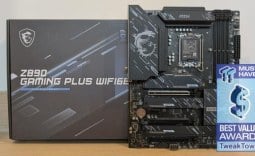 MSI Z890 Gaming Plus WIFI6E Review - Z890 for under $200
 Mortal Kombat (1995) 4K Ultra HD Blu-ray Review
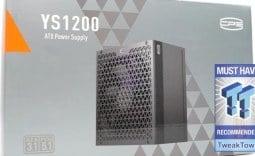 CPS PCCooler YS1200 ATX 3.1 80 PLUS Gold PSU Review
 ASRock X870E Taichi White Review: a premium AM5 motherboard with 10G LAN and WiFi 7
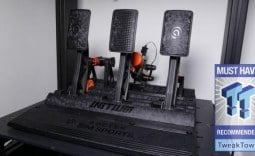 Asetek Initium Pedal Modular Upgrades Review
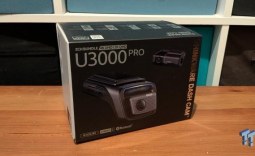 Thinkware U3000 Pro Review - Smart Dashcam with Wi-Fi quirks
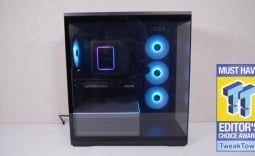 Montech TG3 Mid-Tower Chassis Review
 ASUS ROG Strix X870E-A Gaming WiFI7 Neo Review - A New Enticing Option
 Noctua NL-LC1-36 Liquid CPU Cooler Review
 Logitech G316 X 98 Wired Gaming Keyboard Review - Retro-Inspired Board that Falls a Little Short
 Windows 11 may be encrypting your drive already, and I checked where my recovery key went
 GIGABYTE's 40 Days of INFINITY celebrates 40 Years of Innovation with stunning GeForce RTX graphics cards and rewards
 I swapped File Explorer for this free file manager and finally got the layout I wanted
 How to tell if someone has been using your Windows PC without your permission
 6 Task Manager tips for troubleshooting Windows performance problems
 ASUS ROG's 20th Anniversary Line-up of Premium PC Gaming Gear has Arrived - Here's Everything You Need to Know
 Six File Explorer tips every Windows user should know
 I switched my PC to encrypted DNS in Windows 11, and browsing felt more private
 Printer Not Working in Windows? How to fix detection, print queues and drivers
 The Ultimate Guide to Personalizing Your Windows 11 Taskbar