











Micron's introduction of their 3D NAND technology yesterday marks what could be a massive jump in capacity for enterprise and even consumer SSD's. We could, with Intel's partnership and stake in the technology, see upwards of 10TB SSD's for far less than we currently pay for the size.
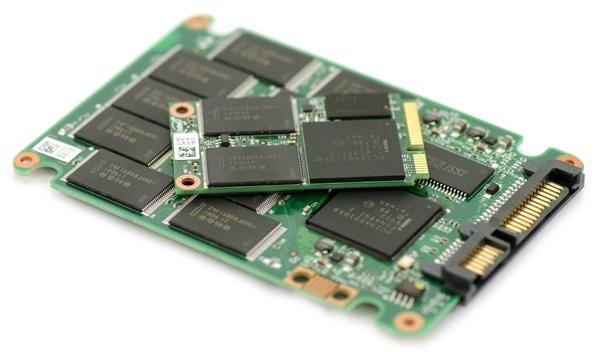
The magic to this leap in capacity, and even potentially prune the price per GB, is in the packaging. It's far from a perfected process, but once manufacturing has picked up and fabs are properly modified to support the manufacturing process, the costs associated will reduce appropriately. But that stacking can reduce costs even more because of the manufacturing efficiency associated with it. The benefits may not be immediately apparent, though that simplified process of making the whole package will eventually trickle down to us, the consumer. And we'll eventually benefit greatly from it.
Furthermore, the verticality, as evidence by Samsung's method, can result in an increase in density that could allow for even USB thumb drives with multi-terabyte capacities. Again, that move to consolidate the entire package uses less room than even the V-NAND structure employed by Samsung. Micron even claims that their solution has a massive three times the density as their competitors solution. If that's true, then it won't be too terribly long before 10TB or even 20TB SSD's become affordable, and normal, for consumers.
What's more, because of how the underlying architecture is designed, with the NAND cells physically closer together, the latency is potentially much less than what we've been used to and speeds could increase naturally as a result. Of course you need the proper interface in order to actually take full advantage of any speed increases, because SATA 3.0 just isn't quite cutting it for the true speed freaks. Regardless, this is certainly the innovation we've needed to help spur better, bigger and faster storage for all of us.
 Huawei produces 122TB SSDs using proprietary packaging to work around US semiconductor restrictions
 Samsung finishes development on next-gen 400-layer NAND, 1Tb 400-layer TLC NAND in early 2025
 SK hynix reportedly making High Bandwidth Storage (HBS): stacked chips for next-gen smartphones
 ADATA chairman says unprecedented and historic shortage of DRAM, SSDs, and HDDs is here
 MLC NAND prices have tripled as Samsung shuts its last 2D NAND line and Kioxia plans a full exit by 2029
 RAM crisis is getting worse, Valve engineer warns
 Xbox's return to exclusives was decided 'very early on' by CEO Asha Sharma
 Xbox console exclusives can include multiplayer games too
 Assassin's Creed Black Flag Resynced sells over 3 million copies, New Game+ is coming
 Modder plays GTA Vice City and GTA III on a TV inside GTA San Andreas
 Enthusiast puts 11 fans and an AiO on an RTX 3080, gains only 4 FPS
 Spotify removed 75 million AI-generated tracks in 2025 as it cracks down on royalty abuse
 YouTuber claims Sony is using social media bots to push back against backlash over its physical disc announcement
 Apple's first OLED iPad mini could launch as early as October
 Ryzen 7 7700X3D outperforms Ryzen 7 5800X3D with just one stick of DDR5, making AM4 a terrible option for your next build
 SteelSeries Arctis Nova 7 Wireless Gen 2 Headset Review - New and Improved, But Is It Enough?
 AMD Ryzen 7 7700X3D Review - Days of Future Past
 Samsung 990 2TB SSD Review - Ninth Gen QLC at PCIe Gen4 Speeds
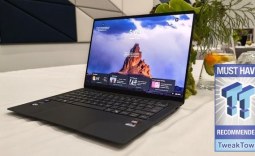 ASUS ExpertBook Ultra (Panther Lake) 14" Business Laptop Review
 ASUS ROG Raikiri II Xbox Wireless Controller Review - Ready to Take Control
 MOZA FMP18 Panel Bundle Review: authentic F/A-18 Hornet cockpit controls for flight sims
 Micron 6600 ION 245.76TB Enterprise SSD Review - Best in Class Programming Speeds
 MOZA MA3F EFCM Flight Control Module Review: authentic Airbus A320 autopilot panel for simulators
 Turtle Beach Stealth Pro II Wireless Gaming Headset Review - Premium Sound, Fantastic Features
 MOZA MGX1000 Instrument Panel Review: a realistic Garmin G1000 replica for immersive flight sims
 I use this decade-old free tool that finds files faster than Windows Search does
 I install and update most of my apps with this Windows command now, and I stopped downloading sketchy installers
 Hisense U6SF 65-inch MiniLED TV: High Performance Meets Leisurely Convenience
 I stopped digging through Windows menus after I set up this one folder
 Don't sell your Windows laptop until you do these things
 6 PC cleaning mistakes to avoid for safer hardware maintenance
 Phison and Intel Take Aim at Local AI's Memory Wall with aiDAPTIV
 How to Remap Keyboard Keys in Windows using Microsoft PowerToys
 7 tips to organize your Windows files for faster, easier access
 Intel Arc G3 Extreme first impressions with MSI's Claw 8 EX AI+ - Incredible power for an extreme price